
Starbucks Mocha Frappuccino vs Homemade Iced Protein Mocha
The measured chocolate protein shake and espresso recipe provides more protein without added sugar. The shake contains non-sugar sweeteners and naturally occurring milk sugar; ice and toppings are excluded.
Same calories. Different nutritional trade-offs.
Same craving. Different choice.
Compare Your Calories
Starbucks bottled Mocha Frappuccino label: 13.7 fl oz, 270 calories, 10 g protein and 32 g added sugar; 100 calories is about 5.1 fl oz with 3.7 g protein and 11.9 g added sugar. fairlife Nutrition Plan Chocolate: 340 mL, 150 calories, 30 g protein and 0 g added sugar. USDA 171891 espresso: 9 calories and 0.12 g protein per 100 g. The 220 mL shake + 30 g espresso recipe supplies 99.76 calories and 19.45 g protein. A month is 52 weeks ÷ 12. Approximate label-based comparisons; unreported nutrients are not treated as zero. These totals do not predict weight change, fullness or health outcomes.
This information is for general educational purposes and does not replace individualized medical advice, diagnosis or treatment. Speak with a qualified healthcare professional about questions specific to your health.
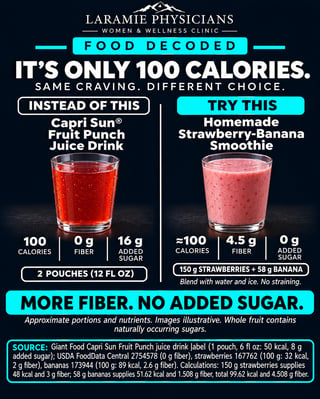 Capri Sun Fruit Punch vs Strawberry-Banana Smoothie