
Pelvic Wellness Library · Volume 03
Understanding vTone & FormaV
Two distinct technologies. Different mechanisms. Individualized care.
Two distinct technologies. Different mechanisms. Individualized care.
LARAMIE PHYSICIANS WOMEN & WELLNESS CLINIC
Pelvic Wellness Library · Volume 03 · Editorial version: October 20, 2026
Pelvic Wellness Library
Welcome
Technology names can make a treatment conversation sound simpler than it is. Two applicators may appear in the same program while delivering different kinds of energy, serving different purposes and carrying different evidence. Understanding those differences helps you ask more useful questions before making a decision.
This book introduces electrical stimulation and radiofrequency without treating them as interchangeable. It also explains what device clearance, research and a proposed clinic program can—and cannot—tell you. It does not establish suitability, approve a procedure or promise an outcome. A clinician must evaluate the exact device, intended use, risks, alternatives and your individual circumstances.
Chapter 1
Chapter 1. Electrical stimulation: the vTone distinction
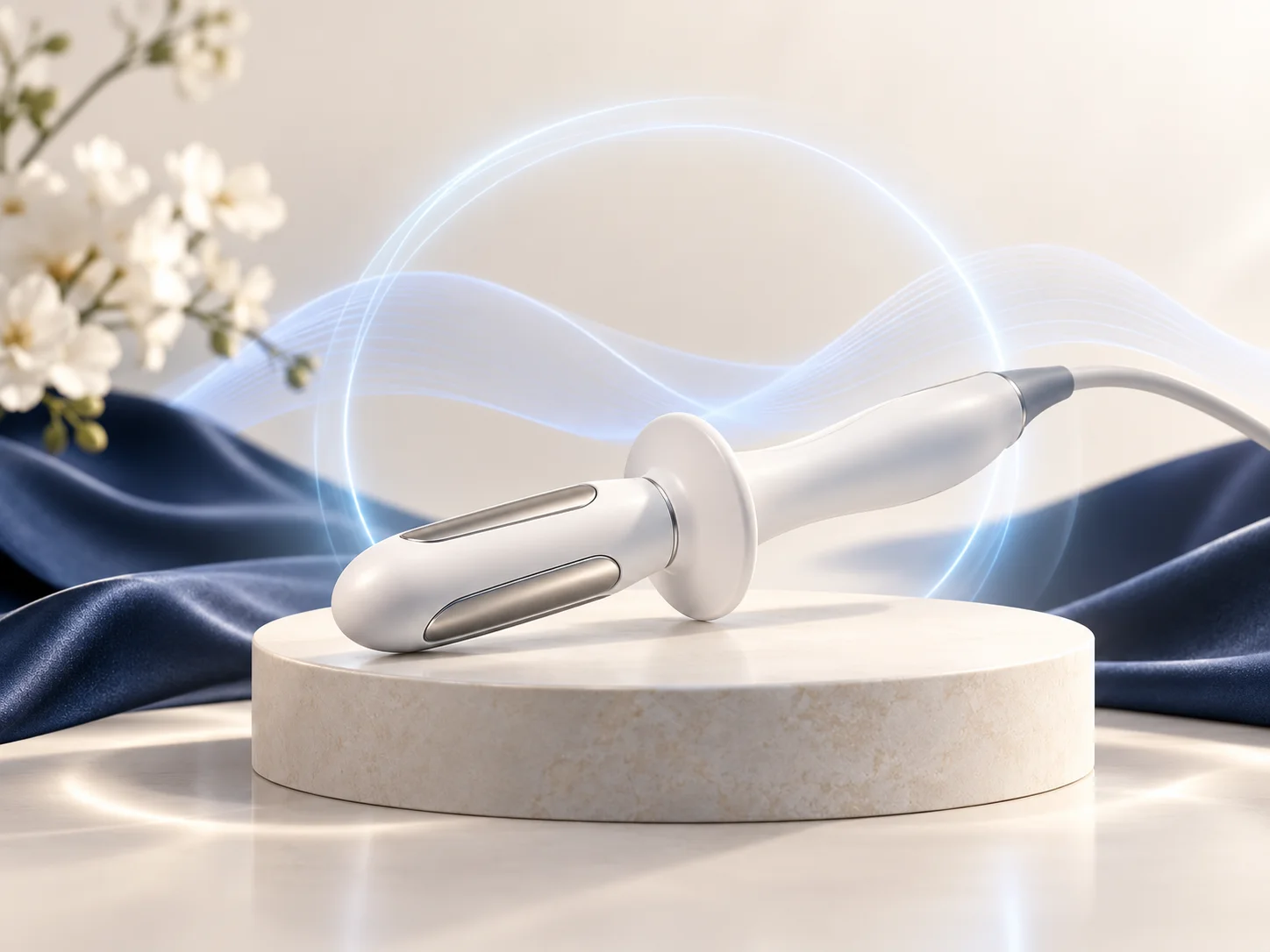 vTone · electrical stimulation
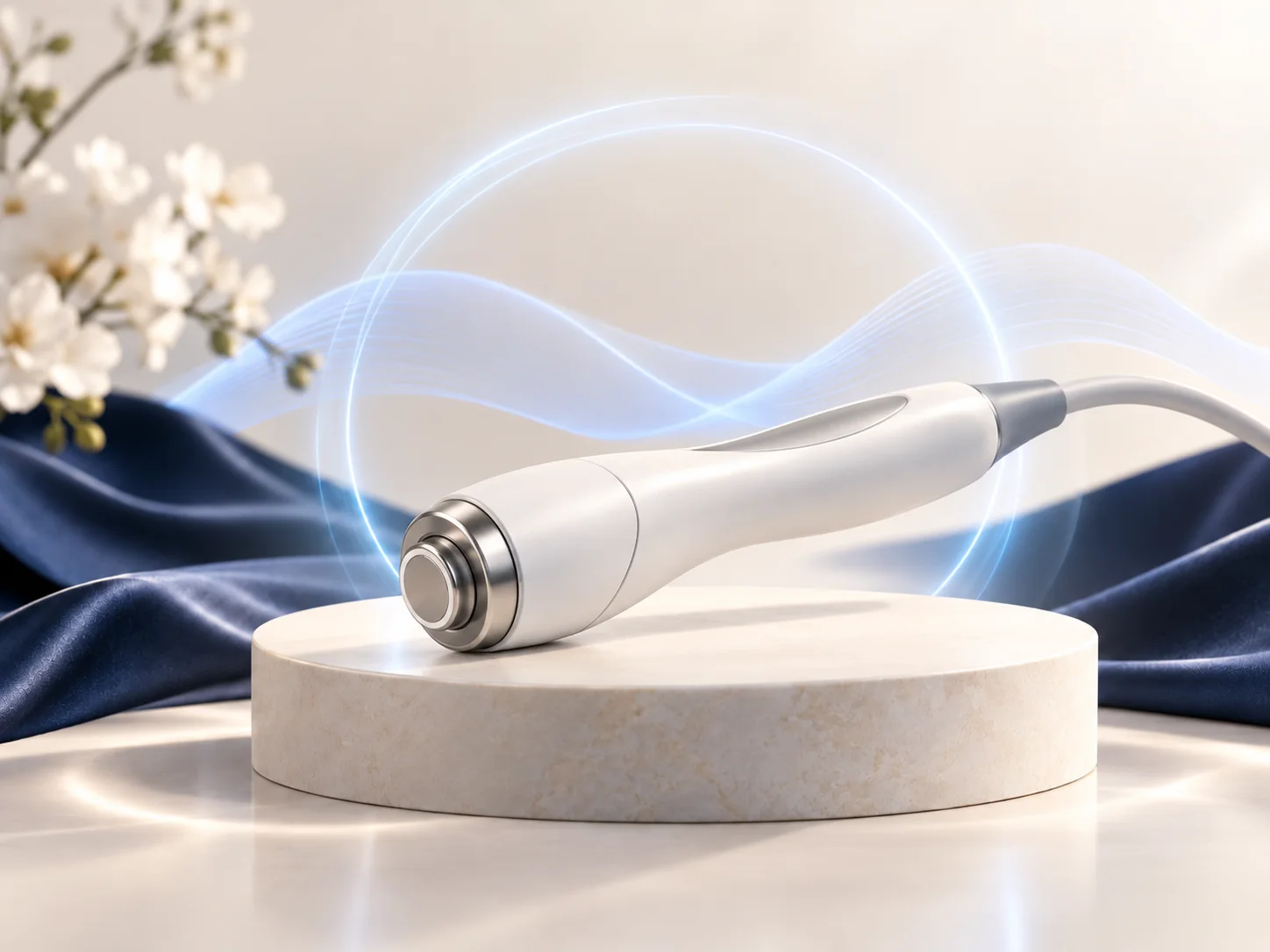 FormaV · radiofrequency
vTone is associated with intravaginal electrical muscle stimulation. The FDA record for the InMode System with vTone Applicator, K200293, identifies a non-implanted electrical continence device. The record identifies electrical stimulation for incontinence. This edition does not quote the full Indications for Use because the underlying PDF could not be directly inspected; the exact current labeling must be confirmed before care. The substantial-equivalence decision is dated May 5, 2020. [1]
Neuromuscular re-education refers to an approach directed toward muscle function and the relationship between nerve signals and movement. It does not mean that every case of urinary leakage is caused by weak muscles or that every patient should receive the device. An examination and review of current device instructions are necessary before a recommendation.
Electrical stimulation differs from voluntary pelvic-floor exercise: energy is delivered through a device rather than relying only on an intentional contraction. It also differs from radiofrequency, which uses a different physical mechanism. A device treatment should not be described simply as “better exercise,” and its presence in a program does not replace consideration of conservative rehabilitation or other appropriate care.
Ask what finding supports the recommendation, how treatment relates to your symptoms and whether guided rehabilitation or another option is appropriate. The device name alone is not a sufficient explanation of why an approach is being considered for you.
KEY TAKEAWAY: The vTone record concerns electrical stimulation for a specific labeled indication. It does not establish the same indication for radiofrequency or approve an entire membership program.
Chapter 2
Chapter 2. Radiofrequency: the FormaV distinction
FormaV uses radiofrequency energy for tissue-directed heating. This is a different mechanism from electrical stimulation. A clinician considering it must discuss the exact intended use and current device labeling, not rely on the clearance of a different applicator or technology. The proposed LPWWC combined program considers FormaV only when tissue-directed treatment is clinically appropriate. [2, 3]
The regulatory distinction is material. FDA’s 2018 safety communication, summarized by New Zealand regulator Medsafe, addressed energy-based vaginal rejuvenation and related uses. That historical communication is not, by itself, a current determination of every device’s regulatory status. The original InMode correspondence and exact current instructions still require direct reviewer confirmation. [2]
FDA’s 2018 safety communication about energy-based vaginal “rejuvenation” and related uses warned that safety and effectiveness had not been established for those uses and described reports of serious harms, including burns, scarring and pain. Do not interpret a smooth applicator image, a warming sensation or a marketing term as proof of safety or effectiveness. [3]
This library does not assert current FormaV clearance for urinary incontinence, equivalence to vTone or approval of a combined care program. Before care, LPWWC must confirm current documentation for the exact device and intended use and explain benefits, uncertainties, risks and alternatives in an individualized discussion.
QUICK ANSWER: “If vTone has an FDA record, does that cover FormaV too?” No. Device labeling and evidence must be considered separately.
Chapter 3
Chapter 3. Read evidence with its boundaries attached
A 2022 randomized trial studied intravaginal electrical stimulation in women unable to contract the pelvic-floor muscles voluntarily. It used weekly treatment over eight weeks. Those participants, the intervention and the schedule are part of the result; they cannot be removed when discussing what the study means. It does not test LPWWC’s proposed six-week program. [4]
A 2022 meta-analysis reviewed nine randomized trials of intravaginal electrical stimulation for urinary-incontinence symptoms. Pooling research can provide a broader view, but the studies used different methods and measures. A review does not establish universal benefit, prove that one branded applicator will produce a particular result or determine an individual’s suitability. [5]
A prospective combined-treatment study published in 2024 evaluated bipolar radiofrequency with pelvic-floor rehabilitation and patient education. The regimen included three combined treatments two weeks apart. Because several components were used together, the findings cannot isolate what radiofrequency contributed. The regimen is not the same as six vTone and three FormaV modalities proposed by LPWWC. [6]
Ask whether a claim is about symptoms, muscle function, quality of life or another outcome. Ask who was studied, what alternatives were compared and how long follow-up lasted. A statistically measured change does not promise that your symptoms will improve to the degree you hope for.
WHAT THE RESEARCH SHOWS: Findings belong to the population, intervention and follow-up studied. Neither individual-device research nor a combination study proves the precise proposed LPWWC regimen.
Chapter 4
Chapter 4. Separate mechanisms, programs and optional care
Technology comparison
| Topic | vTone | FormaV |
|---|---|---|
| Mechanism | Electrical muscle stimulation | Radiofrequency tissue heating |
| Evidence context | Electrical-stimulation research and specific device labeling | Separate RF and combined-treatment research; intended-use verification required |
| Proposed program role | Both standard programs | Combined program only when clinically appropriate |
| Not established here | Universal suitability or guaranteed improvement | Same cleared indication as vTone or guaranteed improvement |
The two proposed memberships organize care and payments; they are not themselves regulatory approvals. Adding modalities does not necessarily mean adding separate visits, and a higher-cost program is not automatically a better choice for an individual. Clinical findings, not the number of technologies, should inform a recommendation.
MorpheusV / Morpheus8V is a distinct optional physician-directed consideration involving fractional radiofrequency microneedling. It is not a third standard membership and is not automatically included in either proposed program. This library provides no price, treatment count, interval or eligibility promise for that option. A separate clinical assessment and quote would be required.
The supplied product images are illustrative artwork, not verified manufacturer photographs. They help distinguish concepts but cannot confirm the exact applicator used by the practice, its instructions or its indication. Visual similarity should never be used to infer device clearance.
WHAT WE DON’T KNOW YET: Final LPWWC clinical protocols, exact device documentation and patient-specific recommendations remain matters for documented clinical review.
Chapter 5
Chapter 5. Questions before agreeing to care
A useful treatment discussion should explain why the approach is proposed, what benefit is reasonably expected, what remains uncertain and what other approaches are available. It should not ask you to infer those answers from a package name or a before-and-after story. Decisions about care and decisions about payment are related, but they are not the same decision.
Questions to ask your clinician
- What diagnosis or finding supports this particular recommendation?
- What is the exact device and intended use, and what does current labeling say?
- Which evidence applies to my symptoms and which evidence does not?
- What conservative or other established options should I consider?
- What possible adverse effects and uncertainties should I understand?
- What preparation and aftercare instructions apply to this exact procedure?
- How would response be reassessed, and what if improvement is limited?
Do not independently stop medication or apply a preparation schedule found online. Ask the clinical team for individualized written instructions. If you have symptoms that need urgent assessment, do not wait for a book request or a routine treatment discussion.
For a non-emergency enquiry, contact LPWWC at (307) 745-8991 or https://laramiephysicians.com/contact/. Compare proposed programs at https://laramiephysicians.com/bladder-control-pelvic-restoration/. Exploration is not clearance, enrollment or payment.
BEFORE YOU GO: A technology is a tool, not a diagnosis. Understanding its limits is part of an informed decision.
Pelvic Wellness Library
References and educational context
[1] FDA. InMode System with vTone Applicator, K200293. May 5, 2020. https://www.accessdata.fda.gov/scripts/cdrh/cfdocs/cfPMN/pmn.cfm?ID=K200293
[2] Medsafe. The USFDA Warns Against Use of Energy-Based Devices to Perform Vaginal Rejuvenation or Vaginal Cosmetic Procedures. September 5, 2018; historical safety context, not current device clearance. https://www.medsafe.govt.nz/safety/EWS/2018/EnergyBasedDevicesVaginalRejuvenation.asp
[3] Medsafe. The USFDA Warns Against Use of Energy-Based Devices to Perform Vaginal Rejuvenation or Vaginal Cosmetic Procedures. September 5, 2018; summary of the FDA communication, not current US device clearance. https://www.medsafe.govt.nz/safety/EWS/2018/EnergyBasedDevicesVaginalRejuvenation.asp
[4] Intravaginal electrical stimulation increases voluntarily pelvic floor muscle contractions in women who are unable to voluntarily contract their pelvic floor muscles: a randomised trial. 2022; PMID 34952812. https://pubmed.ncbi.nlm.nih.gov/34952812/
[5] The efficacy of intravaginal electrical stimulation (IVES) in treating female with urinary incontinence symptom from meta-analysis of nine randomized controlled trials. 2022; PMID 36176556. https://pubmed.ncbi.nlm.nih.gov/36176556/
[6] Bipolar Radiofrequency Treatment of the Vaginal Canal in Conjunction with Patient Education and Pelvic Floor Rehabilitation for the Treatment of Women with Mixed Urinary Incontinence. 2024. https://doi.org/10.1089/gyn.2023.0142
Educational production draft; documented clinical review is pending. General information only, not individualized instructions, a provider-patient relationship or a result guarantee. Publisher: LPWWC, 1277 N 15th St, Laramie, WY 82072. No physician approval or authorship is asserted.
Keep a copy of this guide
Free online reading does not require contact details. PDF requests use the existing contact and separate optional marketing permissions.